

Perimenopause or Burnout? Why It Can Be Hard to Tell the Difference
You're exhausted, even after a full night's sleep. Your patience is shorter than it used to be. You walk into a room and forget why you're there. You're struggling to concentrate, feeling overwhelmed by things you once managed easily, and wondering when you became so tired all the time. Maybe it's work. Maybe it's stress. Maybe you're simply doing too much. But if you're in your late 30s or 40s, there's another possibility worth considering: could it be perimenopause, not just burnout?
The truth is, perimenopause and burnout can feel surprisingly similar. And for many women, the two can happen at the same time.
Understanding the difference is an important first step towards feeling like yourself again.
Why Perimenopause and Burnout Can Feel So Similar
Perimenopause is the transitional stage leading up to menopause. During this time, hormone levels fluctuate, particularly oestrogen and progesterone.
These hormonal changes can affect much more than your menstrual cycle. They may influence sleep, mood, concentration and energy levels. Some women experience symptoms for years before their periods stop.
Burnout, on the other hand, is associated with chronic workplace stress that has not been successfully managed. It can leave you feeling emotionally exhausted, mentally disconnected and less effective at work.
Although the underlying causes are different, the symptoms can overlap. And that's where things become confusing.
Five Symptoms That Can Make It Hard to Tell the Difference
1. You're Tired All the Time
You wake up exhausted. By mid-afternoon, you're running on coffee. And by the evening, you have very little energy left.
Fatigue can occur during perimenopause, particularly when hormonal changes disrupt sleep.
Chronic stress can also contribute to exhaustion.
If you're constantly tired despite getting adequate rest, it's worth investigating rather than assuming you're simply doing too much.
2. Your Brain Feels Foggy
Forgetting appointments. Losing your train of thought. Struggling to find the right word. Brain fog is commonly reported during perimenopause.
Stress and poor sleep can also affect memory, attention and concentration.
If you're finding everyday tasks harder than they used to be, both hormonal changes and stress may be contributing.
3. Your Patience Has Disappeared
Perhaps you're more irritable than usual. Small inconveniences feel enormous. You feel anxious for no obvious reason. Or your emotions seem harder to manage.
Mood changes can occur during perimenopause as hormone levels fluctuate. But emotional exhaustion and irritability can also be associated with prolonged stress.
Neither should be dismissed as simply part of getting older.
4. You're Sleeping, But Not Resting
You might fall asleep easily, only to wake at 3 AM with your mind racing. Or perhaps you're experiencing night sweats, restless sleep or difficulty falling asleep.
Sleep disturbances are common during perimenopause.
Stress can also make it difficult to switch off at night.
Poor sleep can then make fatigue, anxiety and concentration problems worse the following day.
5. Everything Suddenly Feels Overwhelming
Your workload hasn't necessarily changed. Neither has your routine. But the things you once handled without thinking now feel difficult.
You may have less emotional capacity, struggle to recover after busy days or feel constantly overstimulated. This can happen with chronic stress. It may also coincide with the emotional and physical changes of perimenopause.
The important question isn't just how much you're doing. It's what else might be affecting your ability to cope.
How Can You Tell If It's Perimenopause or Burnout?
There isn't one symptom that definitively separates the two.
Instead, it helps to look at the bigger picture.
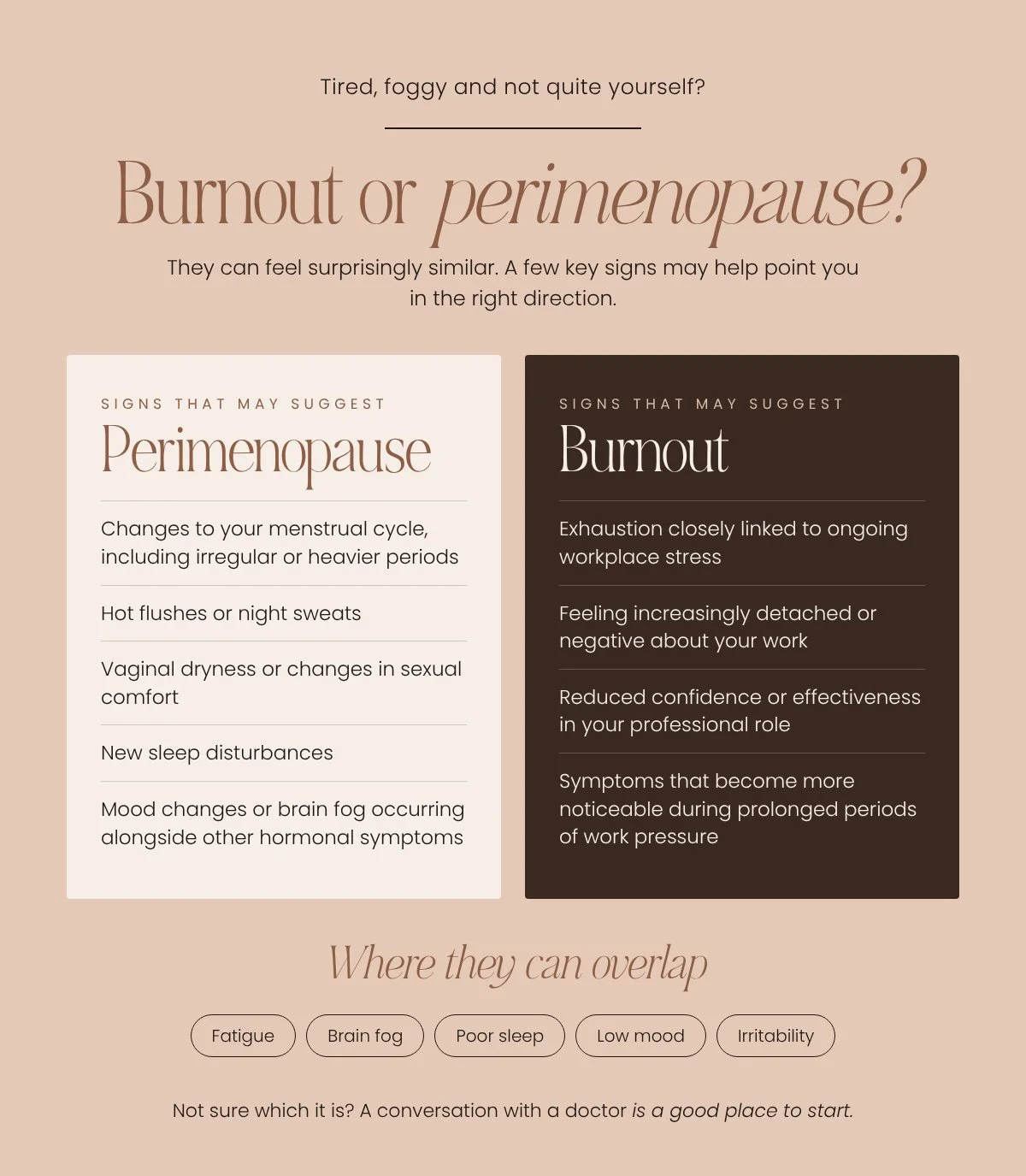
Signs that may suggest perimenopause include:
Changes to your menstrual cycle, including irregular or heavier periods
Hot flushes or night sweats
Vaginal dryness or changes in sexual comfort
New sleep disturbances
Mood changes or brain fog occurring alongside other hormonal symptoms
Signs that may suggest burnout include:
Exhaustion closely linked to ongoing workplace stress
Feeling increasingly detached or negative about your work
Reduced confidence or effectiveness in your professional role
Symptoms that become more noticeable during prolonged periods of work pressure
However, these patterns aren't diagnostic. You can experience perimenopause without obvious hot flushes or irregular periods. And stress-related symptoms can continue outside the workplace. It's also possible to experience both at once.
Can Perimenopause Make Burnout Feel Worse?
Potentially, yes.
Perimenopause can affect sleep, mood and energy levels. When these changes occur alongside work pressure, family responsibilities and everyday stress, coping can become more difficult.
Poor sleep may leave you with less energy to manage stress. Stress may then make it harder to sleep.
Over time, this can become a frustrating cycle. That's why it's important to consider hormonal health, sleep, nutrition, mental wellbeing and lifestyle together rather than treating every symptom separately.
What Should You Do If You're Not Sure?
Start by paying attention to patterns.
Are your periods changing? Are you waking during the night? Have you noticed new anxiety, brain fog or fatigue?
Consider keeping a simple record of your symptoms, menstrual cycle and sleep.
It's also worth speaking with a qualified healthcare professional.
Persistent fatigue, for example, isn't always caused by perimenopause or stress.
Thyroid conditions, iron deficiency, sleep disorders and other health concerns can cause similar symptoms.
A healthcare professional can review your symptoms, medical history and menstrual changes to determine whether further investigation is needed.
For women aged 45 and over, perimenopause can often be assessed clinically without routine hormone testing. Hormone levels fluctuate during this transition, which can make a single blood test difficult to interpret.
Depending on your age and circumstances, different investigations may be appropriate.
You Don't Have to Keep Pushing Through
For many women, their late 30s and 40s are incredibly demanding years. Careers, children, relationships, ageing parents and endless responsibilities can make exhaustion feel normal. But feeling constantly tired, overwhelmed or unlike yourself shouldn't automatically be accepted as part of a busy life.
Sometimes it's stress.
Sometimes it's perimenopause.
Sometimes it's both.
And sometimes there's another underlying reason.
Understanding what's happening is the first step towards finding the right support.
At LUUM Vitality, we believe women's health deserves a considered, individual approach. One that looks beyond isolated symptoms to understand the bigger picture.
If you've noticed changes in your energy, sleep, mood or overall wellbeing, a personalised consultation can help you explore what may be contributing and what support is appropriate.
Frequently Asked Questions About Perimenopause and Burnout
Can perimenopause feel like burnout?
Yes. Perimenopause can cause fatigue, sleep disturbances, mood changes and difficulty concentrating. These symptoms can overlap with those experienced during chronic stress or burnout. A healthcare professional can help assess possible causes.
How do I know if I'm experiencing perimenopause or burnout?
Look at your symptoms alongside your menstrual cycle, sleep patterns and stress levels. Changes in periods, hot flushes and night sweats may suggest perimenopause. Work-related exhaustion, detachment and reduced professional effectiveness may suggest burnout. Both can occur together.
Can perimenopause cause extreme tiredness?
Fatigue is commonly reported during perimenopause, particularly when sleep is disrupted. However, persistent or severe tiredness can have other causes, including iron deficiency, thyroid conditions and sleep disorders. It should not automatically be attributed to hormonal changes.
At what age can perimenopause symptoms begin?
Perimenopause most commonly begins in the 40s, although some women notice changes in their late 30s. The timing and duration vary significantly between individuals.
Can perimenopause cause anxiety even if I've never had anxiety before?
Yes. Some women experience new or increased anxiety during the menopause transition. Hormonal fluctuations, disrupted sleep and life stress may all contribute. New or persistent anxiety should be discussed with a healthcare professional.
Can stress make perimenopause symptoms worse?
Stress can affect sleep, mood and perceived wellbeing. Because these are also areas commonly affected during perimenopause, ongoing stress may make symptoms feel harder to manage.
Do I need a hormone blood test to confirm perimenopause?
Not always. For otherwise healthy women aged 45 and over, perimenopause is generally assessed using symptoms and menstrual history rather than routine hormone blood tests. Testing may be appropriate in younger women or when another condition is suspected.
What treatments are available for perimenopause symptoms?
Treatment depends on your symptoms, health history and individual needs. Options may include menopause hormone therapy where appropriate, non-hormonal treatments, sleep support, psychological therapies and lifestyle changes. A qualified healthcare professional can help determine suitable options.