

What if your skincare routine isn't the only thing influencing how your skin ages?
The quality of your sleep, how you manage stress, what you eat and how much you move can all influence your overall health, including your skin.
One possible connection is chronic inflammation, a process that can affect the body in ways that extend beyond what we see on the surface.
What Is Chronic Inflammation?
Inflammation is a natural part of your body's defence system. When you experience an injury or infection, your immune system responds to help protect and repair affected tissue.
This short-term response is known as acute inflammation.
Chronic inflammation is different. It occurs when inflammatory activity persists over time, potentially contributing to tissue damage and increasing the risk of certain health conditions.
While inflammation is essential for healing, prolonged inflammatory activity may also influence the biological processes involved in skin ageing.
Six Everyday Habits That May Contribute to Inflammation
Your daily routine can influence inflammatory activity, particularly when certain habits become consistent over time.
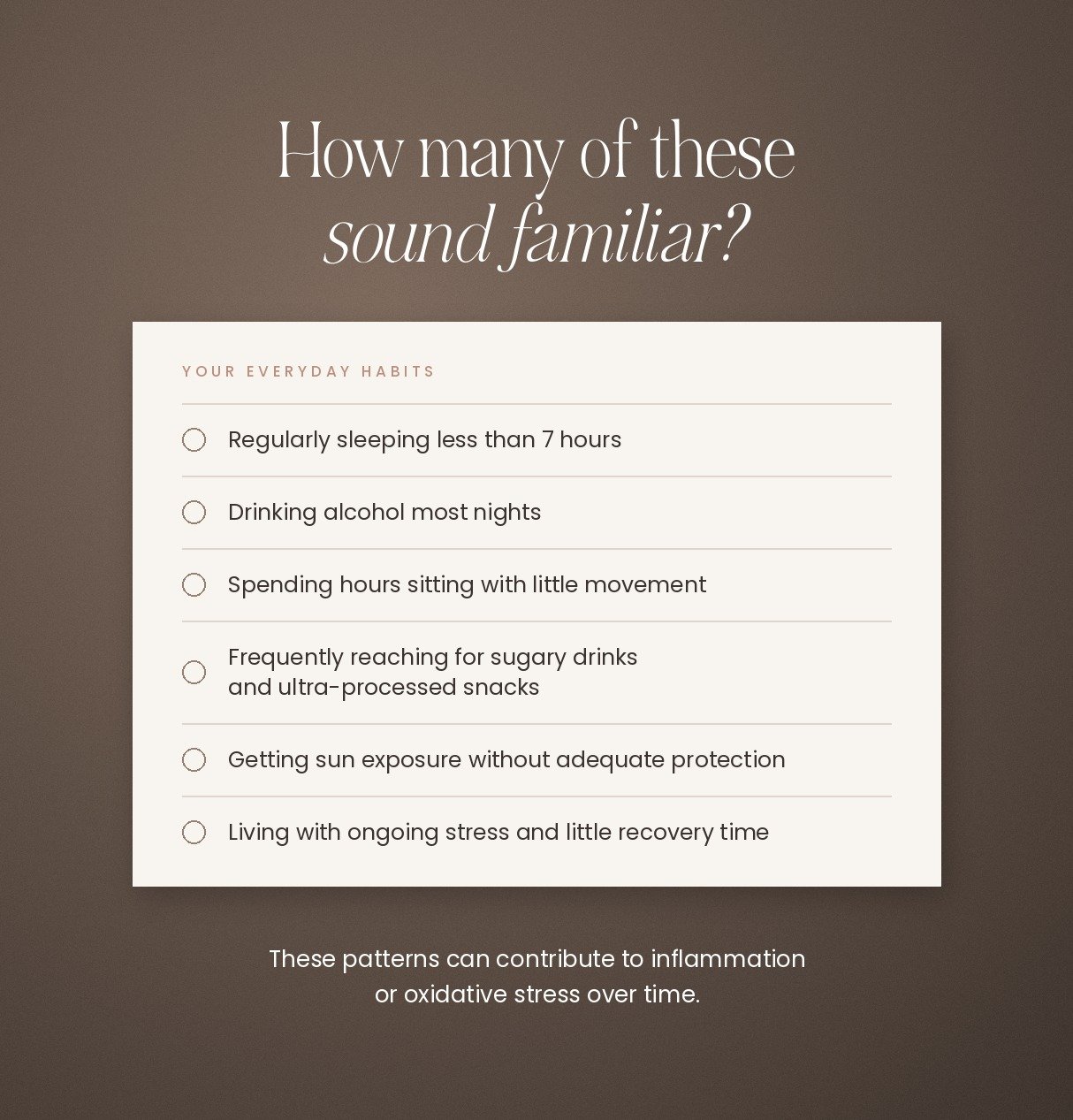
1. Consistently getting insufficient sleep
Regularly sleeping less than the recommended seven to nine hours for most adults can interfere with recovery and immune regulation.
2. Frequent or excessive alcohol consumption
Alcohol can influence inflammatory pathways, disrupt sleep and contribute to dehydration, potentially affecting how your skin looks and feels.
3. Spending long periods sitting
Prolonged sedentary behaviour, particularly alongside low overall physical activity, is associated with poorer metabolic health and may contribute to inflammatory processes.
4. Frequently consuming sugary drinks
Regularly consuming sugar-sweetened beverages may contribute to excess energy intake and metabolic changes associated with inflammation.
5. Excessive sun exposure
Ultraviolet radiation can trigger inflammation and damage collagen and elastin, contributing to premature skin ageing.
6. Ongoing stress without adequate recovery
Persistent psychological stress can affect immune regulation, sleep and skin barrier function.
These habits don't automatically mean someone has chronic inflammation, but they can influence long-term health.
How Can Chronic Inflammation Affect Your Skin?
Research suggests that persistent inflammatory activity can contribute to some of the biological processes associated with skin ageing.
Potential effects include:
Reduced collagen integrity and skin firmness
Changes in elasticity
More noticeable fine lines
Changes in skin texture
Reduced skin barrier resilience
However, these changes can also result from natural ageing, genetics, UV exposure and other factors. They are not reliable indicators of chronic inflammation on their own.
How to Support Your Skin Health From Within
Supporting your skin doesn't necessarily mean adding another product to your bathroom shelf.
Consistent lifestyle habits can make a meaningful difference to your overall wellbeing.
Prioritise sufficient sleep, incorporate regular movement, choose a varied diet rich in vegetables and other whole foods, limit alcohol, protect your skin from UV exposure and create opportunities for stress recovery.
Rather than focusing on perfection, aim for sustainable changes that support your health over time.
At LUUM Vitality, we believe skin health is part of a bigger conversation about whole-body wellbeing. Understanding the factors influencing your health can help inform a more personalised approach to long-term care.
Frequently Asked Questions
Can chronic inflammation accelerate skin ageing?
Persistent inflammation may contribute to processes involved in collagen breakdown and skin ageing. However, skin ageing is multifactorial, and inflammation is only one potential influence.
What lifestyle habits can contribute to inflammation?
Insufficient sleep, excessive alcohol consumption, physical inactivity, poor dietary patterns, excessive UV exposure and ongoing stress may influence inflammatory activity.
Can improving sleep help your skin?
Adequate sleep supports normal immune regulation, tissue recovery and overall health. Improving sleep consistency may also support healthy skin function.
Does alcohol contribute to inflammation?
Alcohol, particularly when consumed frequently or excessively, can affect inflammatory pathways and disrupt sleep. Its effects depend on factors including consumption patterns and individual health.
Can chronic inflammation be reversed?
Some contributors to chronic inflammation may improve with lifestyle changes or treatment of an underlying condition. Management depends on the cause, and persistent inflammation requires appropriate medical assessment.
How do you know if you have chronic inflammation?
You cannot reliably identify chronic inflammation from your skin's appearance or everyday symptoms alone. A healthcare professional may recommend an assessment based on your medical history, symptoms and relevant investigations.
Looking beyond the surface?
Discover LUUM Vitality's personalised approach to health and wellbeing. Contact our team to learn more about available consultations and services.